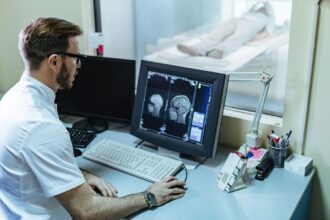
Robotic-assisted spine surgery has transformed how spinal procedures are conducted, offering both surgeons and patients a higher level of precision, efficiency and personalization. Dr. Larry Davidson, a leader in minimally invasive spinal surgery, has been among those leading the shift toward less invasive techniques and the thoughtful integration of advanced technology in spinal surgery. These advanced technologies allow surgeons to plan every step of a procedure with remarkable detail, leading to optimal results.
For patients, especially athletes, the precision offered by robotic planning tools can make a significant difference. Athletes often face the challenge of returning to high levels of performance quickly after an injury, and the ability to customize surgery to their anatomy is crucial for minimizing recovery time and maximizing success. Preoperative mapping, particularly through 3D imaging and trajectory planning, is designed to personalize each surgery, reduce the risk of complications and promote faster recovery.
The Role of 3D Imaging in Preoperative Mapping
At the core of robotic planning tools is 3D imaging, a technology that provides surgeons with an enhanced view of the spine, before the surgery even begins. Traditional 2D X-rays were once the primary method for assessing spinal conditions, but they have limitations in providing a comprehensive, accurate view. In contrast, 3D imaging technology allows surgeons to visualize the spine in multiple dimensions, revealing intricate details that could be overlooked with 2D imaging.
This highly detailed imaging plays an essential role in creating a personalized surgical plan. Surgeons can assess the spine from every angle, identifying deformities, alignment issues and areas of concern with precision. The ability to visualize the spine in three dimensions enables surgeons to plan the most effective approach, ensuring that all critical structures are accounted for and avoiding any unnecessary damage to surrounding tissues. It is important for athletes who require careful planning to maintain mobility and prevent complications that could affect their performance.
Furthermore, 3D imaging technology allows for an in-depth analysis of bone density, alignment and overall spinal health, all of which are crucial for determining the best surgical strategy. For athletes, the ability to preserve muscle and ligament function, while addressing the issue at hand is paramount. This tailored approach to preoperative mapping helps optimize surgical results and supports a faster, smoother recovery.
Trajectory Planning: Customizing Surgical Approaches
Once the 3D imaging has been completed, the next critical step is trajectory planning. This aspect of robotic planning tools is key to ensuring that surgical instruments, such as screws, rods and other implants, are placed precisely and safely. In spinal surgery, the correct placement of implants is vital, as misplacement can lead to complications, including nerve injury, implant failure and prolonged recovery.
With trajectory planning, surgeons can map out the exact path the surgical tools need to take during the procedure, ensuring they follow the optimal trajectory based on the patient’s unique anatomy. This level of precision helps avoid critical structures like nerves, blood vessels, and muscles that are located near the spine.
Trajectory planning is especially important for athletes, as it allows surgeons to adapt the procedure to the athlete’s specific needs, including supporting spinal stability and mobility. Whether the injury is in the lower back or the neck, trajectory planning can help reduce disruption to the patient’s body, while still addressing the underlying issue. This personalized approach is particularly valuable for athletes looking to resume activity as soon as it is safe to do so.
Personalized Care for Athletes: A Faster, Safer Recovery
For athletes, the application of robotic planning tools in spinal surgery is invaluable. When recovering from an injury, time is of the essence, and traditional spinal surgery methods may involve extended recovery periods that are not ideal for athletes who rely on their bodies for performance. The ability to create personalized surgical plans based on 3D imaging and trajectory planning allows surgeons to take a more targeted, precise approach, which helps reduce recovery times, and minimizes the risk of complications.
Because robotic systems are designed to support a more precise and minimally invasive approach, patients may experience less tissue disruption and fewer postoperative complications. It is important for athletes, whose injuries often involve the spine’s delicate structures. Robotic planning tools make it possible to perform surgery with fewer incisions, reducing the trauma to surrounding muscles, ligaments and nerves. As a result, recovery times are often faster, and athletes are often able to return to their training regimens sooner, with less downtime and fewer risks of re-injury.
In addition to minimizing recovery times, personalized care using robotic planning tools also helps optimize long-term outcomes. By carefully considering the athlete’s unique anatomy and performance needs, surgeons can plan the procedure to ensure the best possible spinal alignment and stability. This personalized approach leads to better long-term outcomes, reducing the chances of needing future surgeries and improving overall spinal health.
The Future of Robotic Planning Tools in Spinal Surgery
As technology advances, robotic planning tools are set to play an increasingly important role in spinal surgery. The integration of Artificial Intelligence (AI) and machine learning into these systems will likely allow for even more precise and adaptive planning. AI is being explored for its potential to analyze surgical data, anticipate possible complications and assist surgeons in decision-making during procedures. This added layer of intelligence may help support surgical accuracy, identify potential risks and further personalize patient care.
Advancements in 3D imaging and trajectory planning technologies are expanding the level of detail available when assessing the spine and preparing for surgery. These capabilities can be especially valuable in complex spinal cases, where precision is critical. As robotic systems evolve, surgeons may have access to increasingly sophisticated tools to help customize each case to the individual needs of the patient, including athletes and those with complex conditions.
The Promise of Personalized Spinal Surgery
As advanced planning technologies become more common in spinal surgery, they are offering new ways to support personalized patient care. Dr. Larry Davidson has been among those leading the shift toward minimally invasive techniques and the thoughtful use of technology in surgery. Using 3D imaging and trajectory planning can help tailor the surgical approach to an individual’s anatomy, which may reduce risks and support a smoother recovery. For athletes, this means getting back to training and competition as quickly and safely as possible.
Robotic planning tools are evolving alongside advances in technology, including developments in areas like AI and machine learning. These innovations are being explored to enhance precision and customization in spinal procedures. As technology continues to evolve, it opens the door to more precise and personalized care, giving patients, including athletes, the confidence to return to an active lifestyle.